Faults No Longer "Lost" — Smart Operations Direct to the Source
CloudSino Intelligent Monitoring Platform: From Finding a Needle in a Haystack to Precision Targeting
Modern IT services depend on layers of compute, storage, networking, operating systems, middleware, databases and applications. A single failure can trigger hundreds of alerts. Operations teams need to see the whole dependency chain to identify the cause and restore service quickly.
See the full stack and its business dependencies
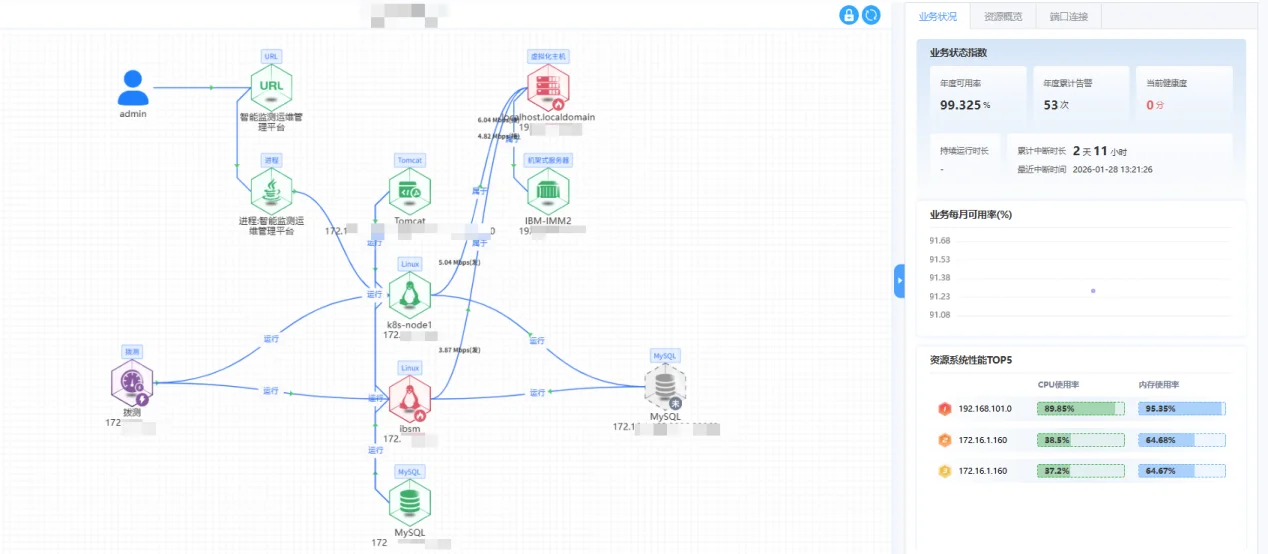
CloudSino combines in-band and out-of-band collection to discover and connect hardware, systems and services.
- Hardware: x86 and ARM servers, storage arrays, Fibre Channel switches, UPS systems and precision cooling.
- Systems: Linux, Windows, Kylin and UOS.
- Middleware and databases: Tomcat, WebLogic, Oracle, Dameng and MongoDB.
- Applications: registration systems, ERP, office automation, websites and application backends.
Business topology shows which databases a service depends on, which virtual machines host them, and which physical servers and storage support those virtual machines. During an incident, the team can follow the affected service chain instead of examining disconnected IP addresses and metrics.
Extract the signal from alert noise
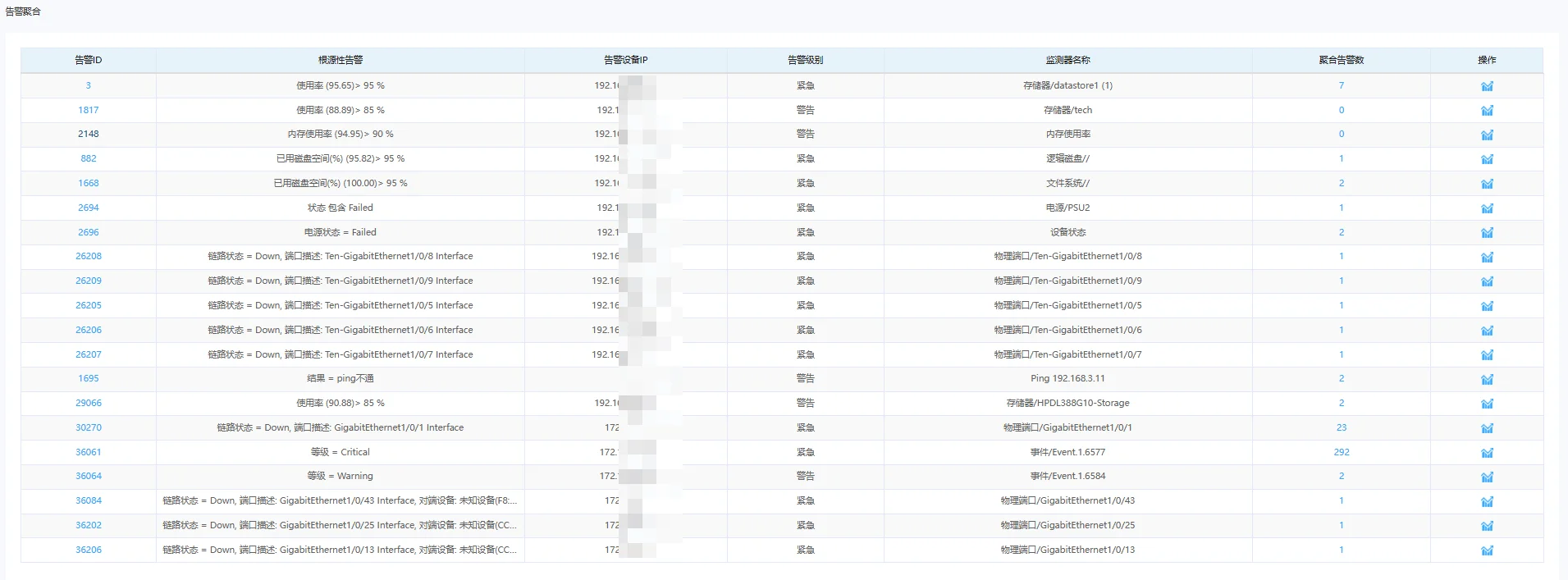
- Alert correlation: Combine alerts caused by the same fault into one incident.
- Root cause analysis: Use dependencies and historical failure patterns to identify the likely source. Application timeouts, database connection failures and missing server heartbeats may all point to one failed physical server.
- Impact assessment: Use service topology to identify affected departments and users and prioritize critical services.
Close the loop from detection to recovery
- Create an ITSM work order from the root cause alert and assign an owner.
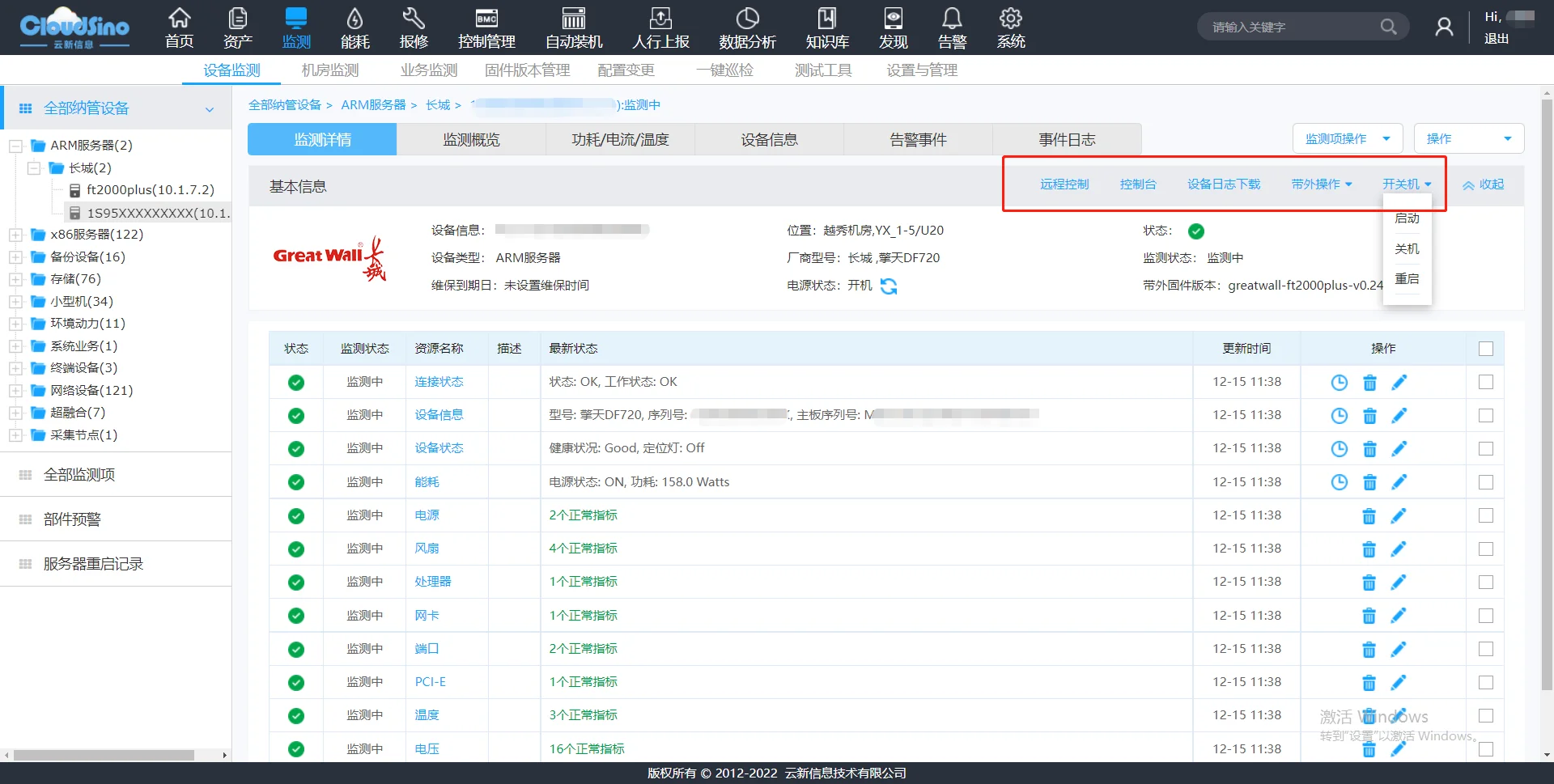
- Use vKVM for remote server restarts and service recovery.
- Run configured remediation scripts for known faults, covering detection, diagnosis, repair and verification.
CloudSino combines 13 years of out-of-band expertise, experience managing more than four million devices and 14 technical support centers in China. The objective is to move operations teams from reacting to alerts toward protecting business continuity.