
Data Center Out-of-Band Hardware Intelligent O&M Platform
The server DCOS is evolved from the self-developed DCM product,Centered on out-of-band management, unified access to server BMC, storage, network, security devices and GPU servers.
View hardware status when OS is unavailable, remotely handle faults without entering the machine room, and obtain component-level asset data without relying on manual records.
Monitoring Available During OS Failures, Remote Handling
Traditional in-band monitoring relies on the OS and business network. When a server crashes, system becomes unresponsive, or network is interrupted, monitoring capability fails. Data centers truly need a management channel independent of production business.
Monitoring available even during OS failures
Even when OS crashes, system is unresponsive, or business services are unavailable, hardware status can still be viewed through the out-of-band channel
No Impact on Production Business Resources
Hardware monitoring does not rely on the business network and does not consume CPU, memory, or network resources of business systems
Remote Hardware Fault Handling
Support for remote power on, power off, restart, console access, and basic hardware operations
Supporting Unattended Machine Rooms
Suitable for hosted IDC, remote disaster recovery, overseas nodes, and remote machine room scenarios
What Problems Does DCOS Mainly Solve
Dispersed management of BMC from various brands, invisible hardware status, high reliance on on-site maintenance, low efficiency of manual inspection, inaccurate asset data, and untrackable configuration changes.
Book a DemoLack of Unified Out-of-Band Management Platform
Dispersed management of BMC, iLO, iDRAC, iBMC, IMM from various brands, with accounts, permissions, and operations lacking a unified entry point
Hardware Device Status Not Visible
Servers, storage, network, security devices, fiber channel switches, and environment monitoring equipment lack unified monitoring
High Reliance on On-Site Maintenance
When faults occur in remote machine rooms, hosted IDC, and unattended machine rooms, on-site personnel operations are often required
Low Efficiency of Manual Inspection
Multi-room, multi-brand, multi-model equipment relies on manual inspection, with delayed fault discovery
Inaccurate Asset Data
Device configuration, component information, warranty status, cabinet location, and U-position data are prone to distortion
Configuration Changes Not Tracked
Disk replacement, capacity expansion, component replacement, firmware upgrades, and device migrations lack automatic records
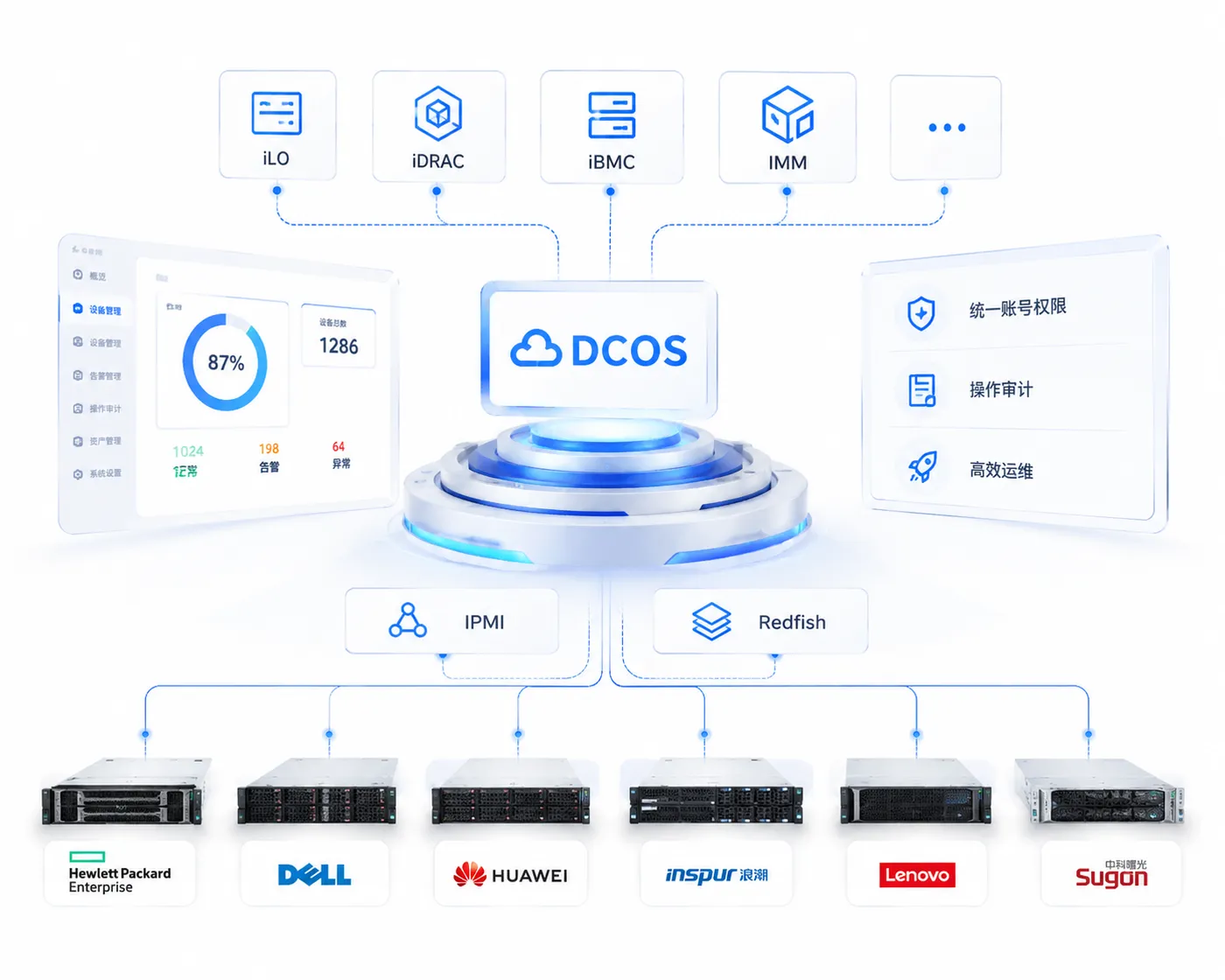
Unified Access to Multi-Brand Out-of-Band Management Interfaces
Enterprise data centers typically have multi-brand, multi-model servers with different OEM out-of-band management entry points. DCOS unifies access to server BMC management ports and mainstream out-of-band management interfaces, centralizing hardware status, remote control, asset information, and operational capabilities of multi-brand servers into one platform.
- Support for iLO / iDRAC / iBMC / IMM interfaces
- Support for IPMI / Redfish protocols
- Unified account permissions and operation audits
- Reduce switching between OEM tools and improve remote maintenance efficiency
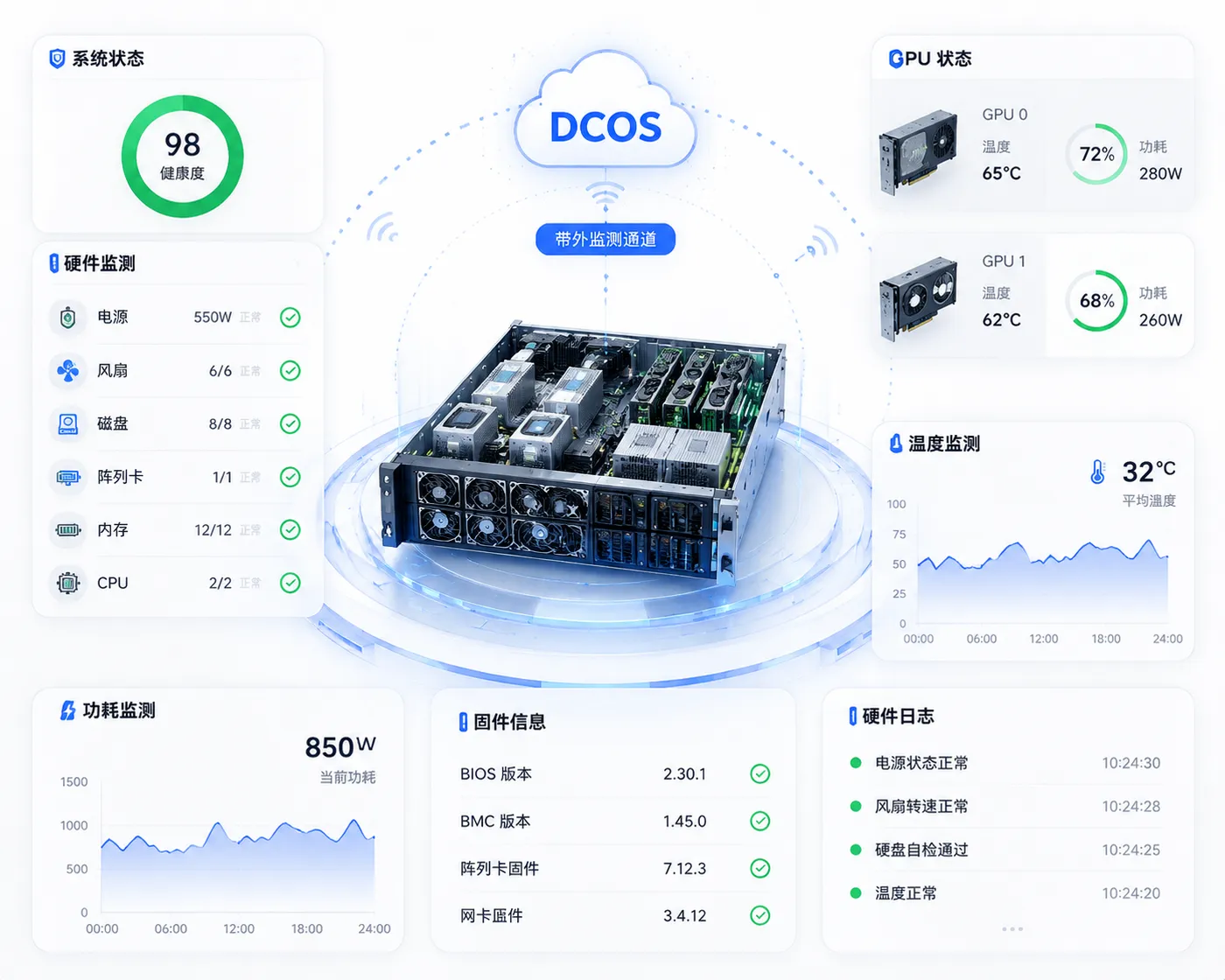
Out-of-Band Hardware Monitoring: Independent of OS
DCOS obtains hardware status through the out-of-band channel, monitoring server power, fans, disks, RAID cards, memory, CPU, GPU, network cards, temperature, power consumption, hardware logs, and firmware information. This approach decouples hardware monitoring from the operating system and reduces impact on the production business environment.
- Power, fan, disk, RAID card, memory, CPU monitoring
- GPU 卡状态、功耗,温度监测
- Firmware version and hardware log collection
- Especially important for core business systems and AI computing centers
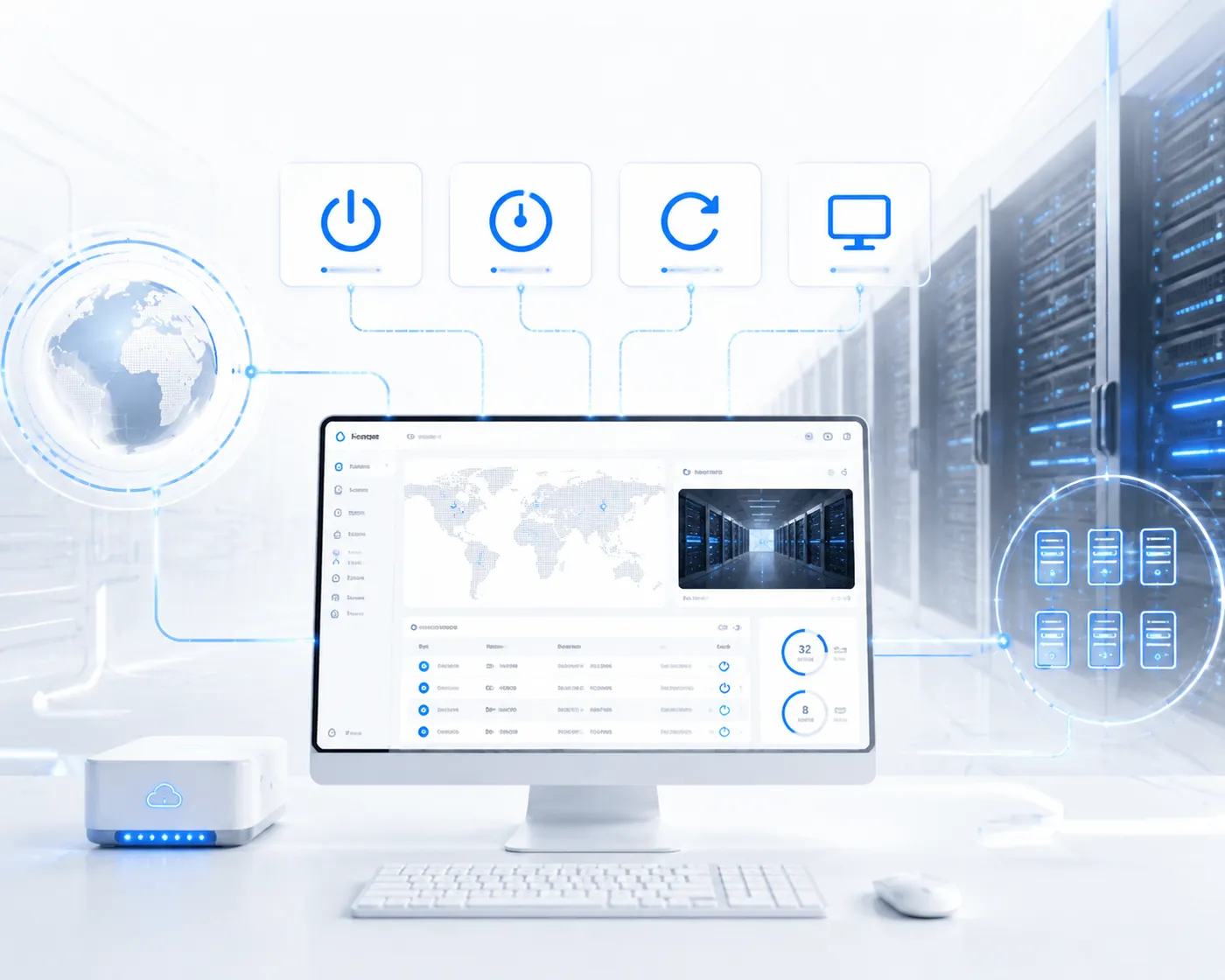
Remote Control: Reducing Dependence on On-Site Personnel
DCOS supports remote power on, power off, restart, remote console, and batch control, allowing O&M teams to complete basic hardware operations from headquarters. This shortens fault handling time and reduces management risks associated with frequent access to the machine room.
- Remote power on / off / restart
- Remote console (KVM over IP)
- Batch control of multiple devices
- Suitable for hosted IDC and unattended scenarios
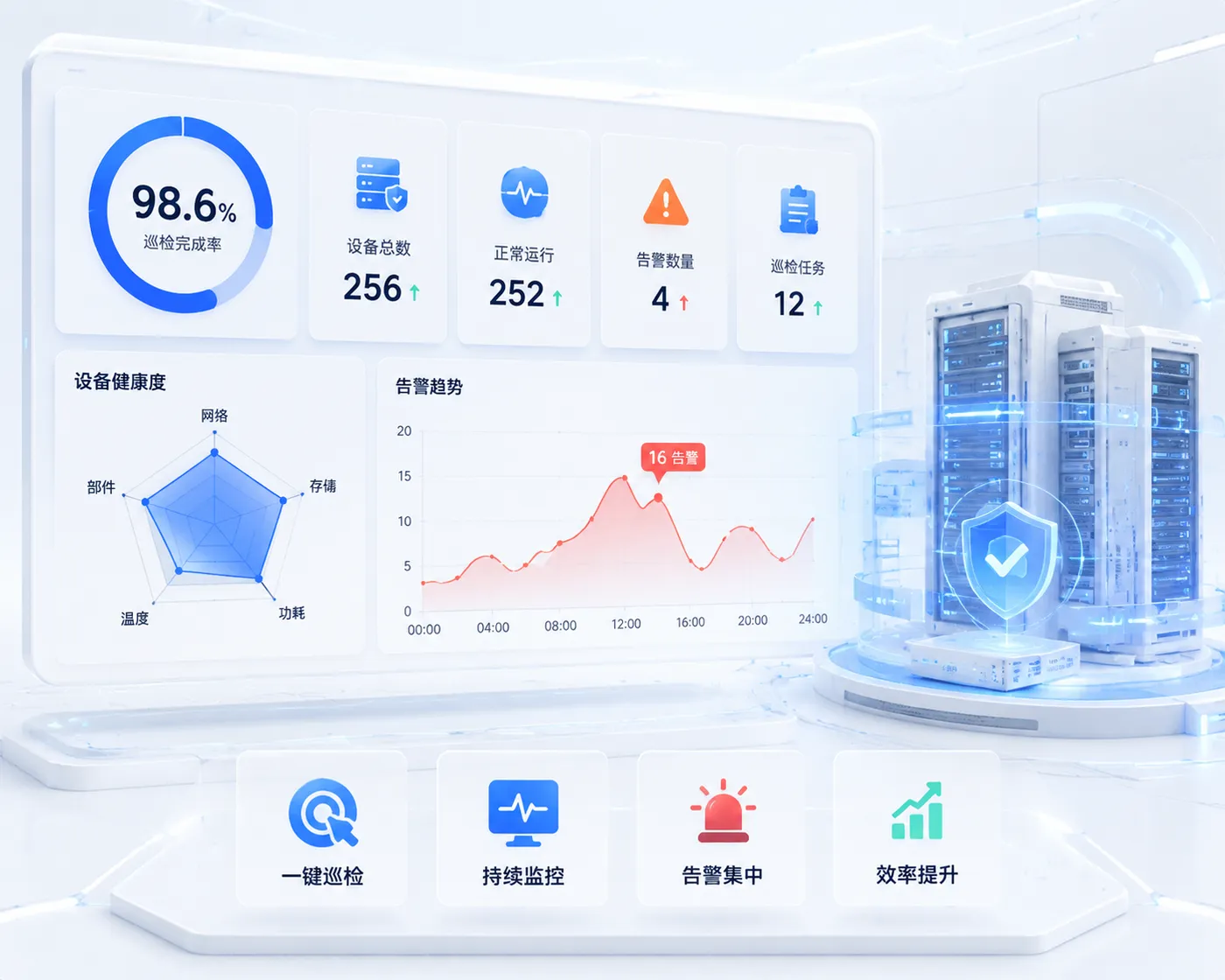
Automated Inspection: From Manual Checks to Continuous Discovery
DCOS supports automated inspection and one-click inspection based on the out-of-band channel, continuously checking device running status, component status, alert information, temperature, power consumption, storage, network, and environment monitoring equipment. The system automatically generates inspection results and centrally displays exception information.
- One-click inspection with automatic report generation
- Continuous monitoring of device running status and component health
- Centralized alert display for rapid problem discovery
- Reduce manual inspection pressure and improve fault discovery efficiency
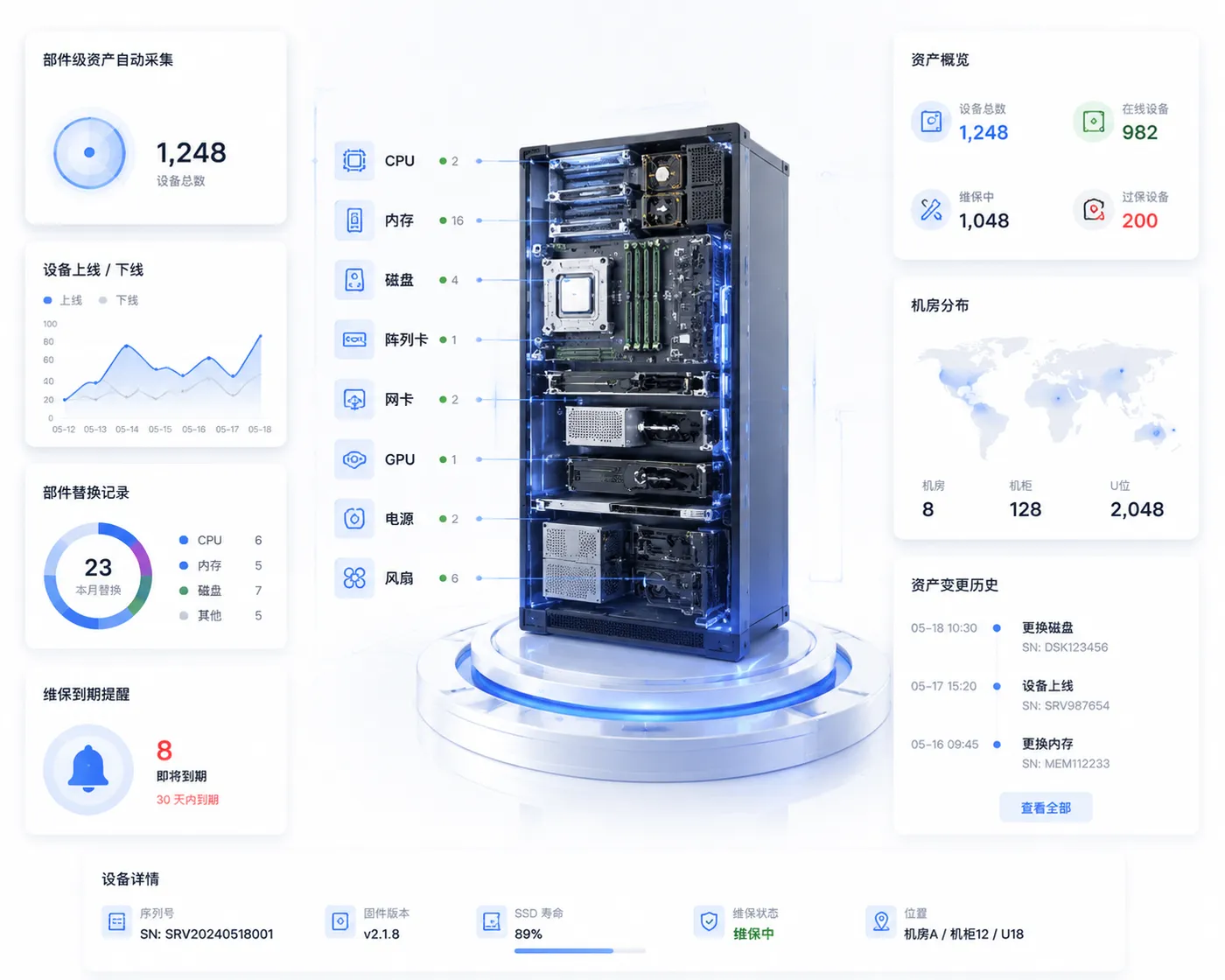
Component-Level Asset Management: Making Hardware Data More Accurate
Truly valuable hardware asset data needs to be precise down to CPU, memory, disk, RAID card, network card, GPU, power supply, fan, serial number, firmware version, SSD lifespan, warranty status, machine room location, cabinet, and U-position. DCOS automatically obtains component-level asset information through out-of-band collection.
- Automatic component-level asset collection
- Device online/offline and component replacement records
- Warranty expiration reminders to reduce equipment warranty lapse risk
- Asset change history tracking and audit reports
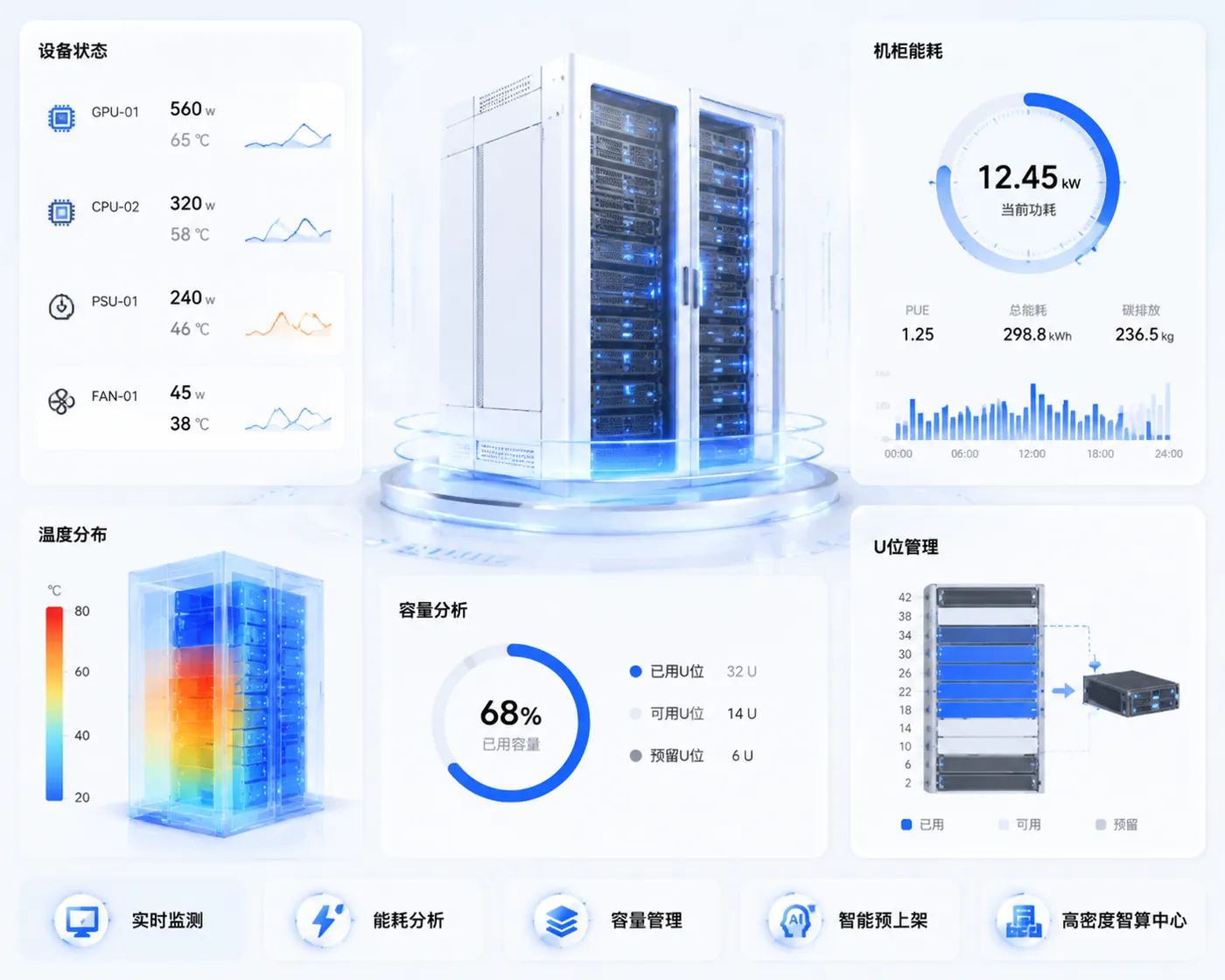
Energy Consumption & Cabinet Capacity Management
DCOS supports device-level power monitoring, core component temperature monitoring, cabinet energy consumption statistics, U-position space management, and intelligent pre-racking. O&M teams can use real data to determine whether devices are suitable for racking, whether cabinets have overload risks, and whether local temperatures are abnormal.
- Real-time device-level power and temperature monitoring
- Cabinet energy consumption statistics and capacity analysis
- U-position space management and intelligent pre-racking
- Especially applicable to high-density cabinets and AI computing center scenarios
Five Core Capabilities, Full Coverage
Out-of-Band Management
Device Monitoring
Asset Management
Automated Operations
Energy & Capacity
Full Coverage of Complex Heterogeneous Data Centers
Covering Multiple O&M Management Scenarios
Unified Out-of-Band Management Platform Construction
Unified access to BMC management ports, centralized management of remote control, hardware monitoring, account permissions, and operation records.
Data Center Hardware Monitoring Gap Filling
Fill monitoring gaps for servers, storage, fiber channel switches, environment monitoring, and cabinet resources.
Multi-Site Machine Room Automated Inspection
Help headquarters O&M team remotely master device status and reduce on-site inspection pressure.
Asset Configuration Acceptance & Inventory
Assist in completing device configuration acceptance, component-level asset collection, asset inventory, and report export.
Hosted IDC Hardware Security Management
Record hardware changes, component replacements, device racking/unracking, and remote operation processes.
AI Computing Center GPU Device Monitoring
Monitor GPU server status, GPU card information, power consumption, temperature, and key hardware risks.
Machine Room Energy & Capacity Optimization
Based on device power consumption, temperature, and U-position data, assist in racking planning and energy optimization.
Building Unified Out-of-Band Hardware O&M Capability
DCOS helps enterprises fill hardware-layer data capabilities, transforming hardware status, remote control, asset information, configuration changes, operation audits, and energy capacity from scattered, manual, reactive processing to unified, automated, and trackable.