Multi-Brand Infrastructure Unified Management Guide
Breaking Server, Storage & Network Operations Silos
Why Multi-Brand Environments Form Operations Silos
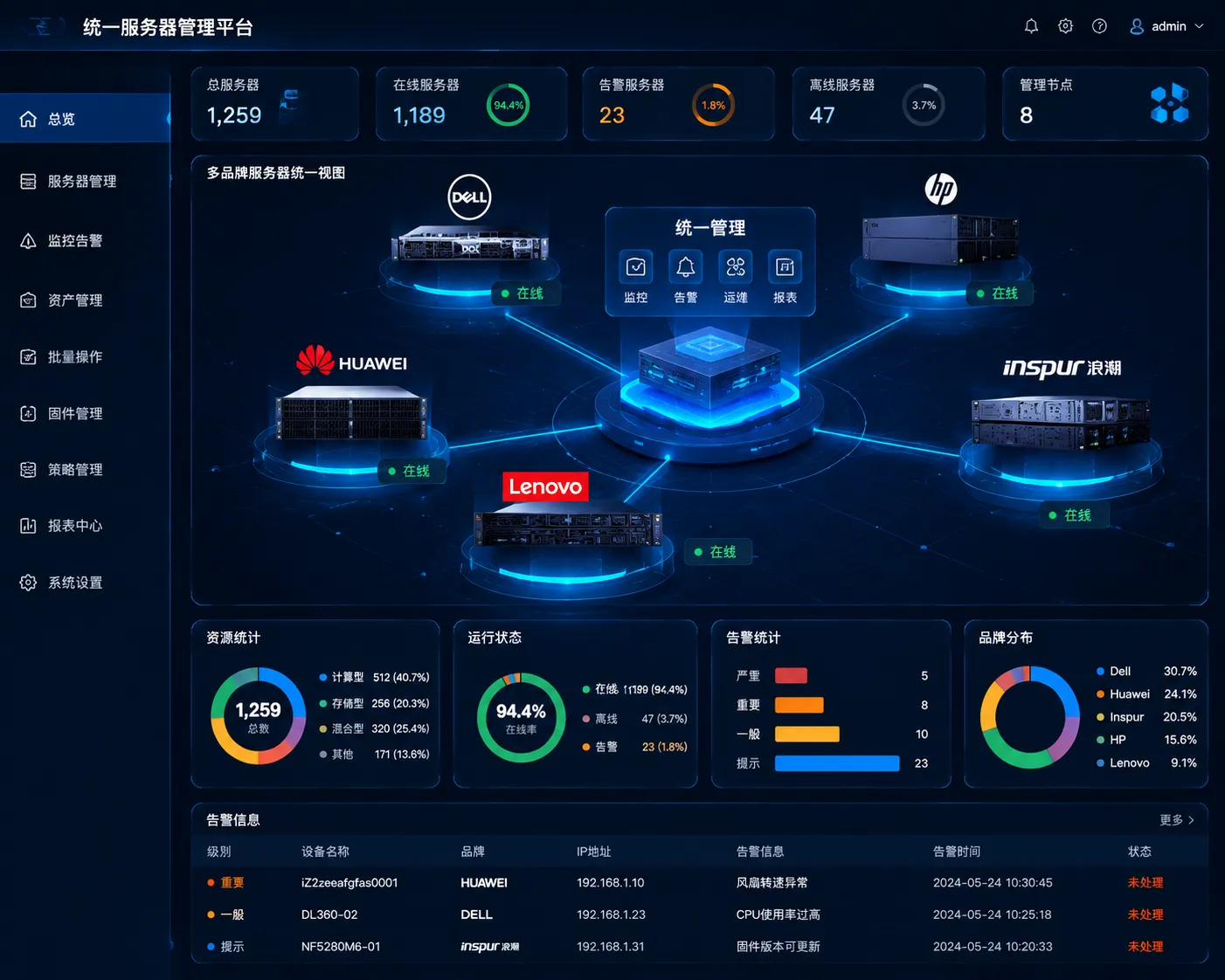
Multi-brand infrastructure unified management helps enterprises connect scattered servers, storage, network, security devices, machine room facilities, virtualization, cloud platforms and software resources, establishing unified resource identity, monitoring data, event semantics, operations processes and business service views. As enterprises expand, regional procurement, Xinchuang replacement, supply chain diversification and continuous equipment updates occur, data centers rarely maintain a single-brand environment for long.
Goals and Challenges of Unified Management
Different platforms may use completely different component names, status codes, alert levels, time formats and lifecycle definitions. The same server may also exist in different systems with various identities such as serial number, hostname, management IP, procurement number, monitoring object and CMDB configuration item.
Core Capabilities of Unified Management
- Build vendor-neutral resource and identity models,Implement cross-brand unified monitoring for servers, storage, network, environment, cloud and software resources,Preserve original vendor evidence and establish unified event semantics,Use topology and time relationships to correlate cross-domain alerts
Cross-Brand Remote Operations Security Practices
You will also learn how to use topology and time relationships to correlate cross-domain alerts, how to uniformly manage assets, configuration changes, maintenance, capacity and equipment lifecycle, and how to achieve secure and controllable cross-brand remote operations through role permissions, approvals, isolated management networks and complete audit trails.
How CloudSino Unifies Multi-Brand Infrastructure Operations
CloudSino discovers and manages multi-brand hardware, machine room facilities, assets, energy consumption and capacity through DCOS, connects CMDB, ITSM, knowledge, approvals and automation processes through iDCOS, and SmartBSM analyzes business topology, service health, root cause and business impact.